Part 3/4 - Compassion and regret for Kimball and his outdated “Miracle of Forgiveness”
This is Part 3/4 of excerpts from When Church is Hard by Tyler Johnson. Also see Part 1/4: “LGBTQ-affirming insights from When Church Is Hard” and Part 2/4: “Protected people make policy. Unprotected people live with policy choices.”
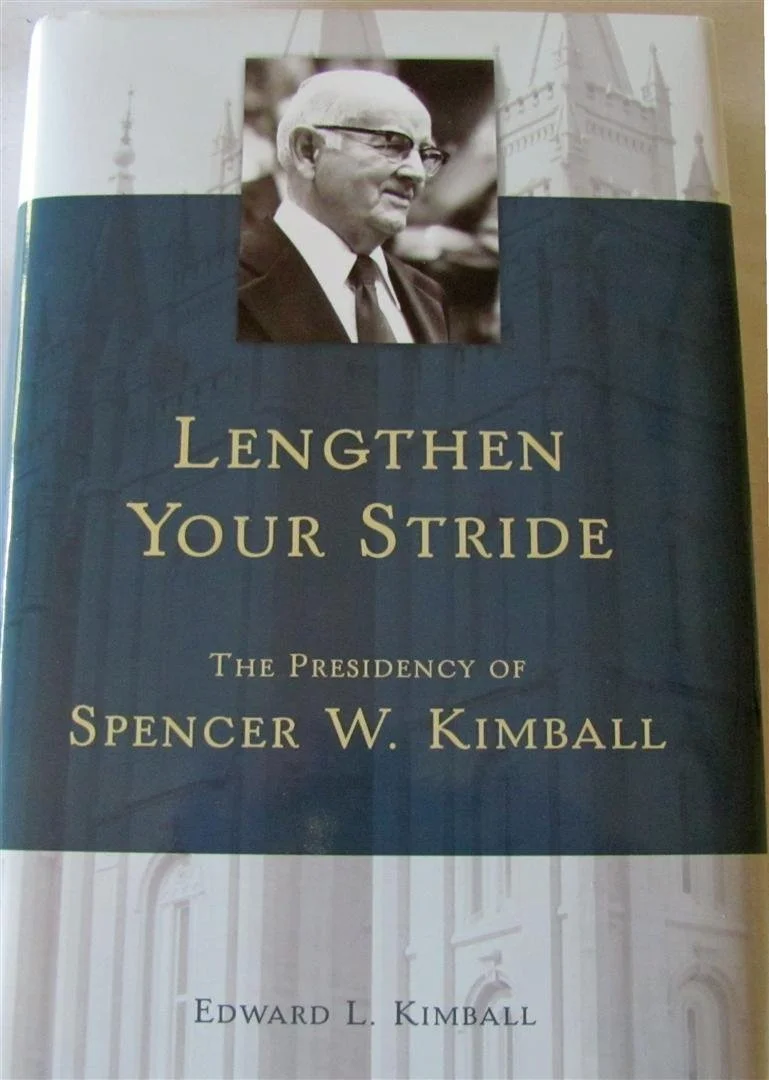
I knew this much: Spencer W. Kimball’s son Edward wrote that his father “later seemed to wish he had adopted a gentler tone. … In 1977, the Mormon leader said to Lyle Ward, his neighbor, ‘Sometimes I think I might have been a little too strong about some of the things I wrote in that book’” (Edward L. Kimball, Lengthen Your Stride: The Presidency of Spencer W. Kimball [Salt Lake City: Deseret Book, 2005]).
Allen Bergin, a retired Brigham Young University psychologist, says, “There are some good things in [the book] that are useful,” says Bergin, former president of the Association of Mormon Counselors and Psychotherapists. “But they are overshadowed by a host of negatives and also outdated policies that the church itself doesn’t even endorse any more” (Peggy Fletcher Stack, “LDS Classic ‘Miracle of Forgiveness’ Fading Away, and Some Mormons Say It’s Time,” The Salt Lake Tribune, July 24, 2015).
That much I knew. But it wasn’t until I read When Church is Hard by Tyler Johnson that I learned this:
[In] Edward Kimball’s two-volume biography … after his father is called to be an Apostle, Edward shares a journal entry in which President Kimball climbs a mountain and, albeit briefly, considers that ending his life would be easier than accepting a call for which he felt hopelessly unqualified. In fact, President Kimball was dogged nearly his entire life by feelings of inadequacy.
Ouch. It’s hard to imagine an apostle feeling suicidal over his calling because of inadequacy. That hit home. I can relate to making decisions, knowing I’m out of my depth, watching others pay the price, and regretting it. Like most people, I have done the best I can with what I knew at the time, and Pres. Kimball is probably no different.
Two things can be true: his book caused horrific damage and destruction in far too many lives, and Kimball himself has my compassion. I don’t know how Jesus sorts out all this stuff in the hereafter; I just know “He’s really good at it. In fact, He’s perfect at it” (Patrick Kearon, “He Is Risen with Healing in His Wings: We Can Be More Than Conquerors,” April 2022 general conference).
Further, none of us are defined by our worst moments. Pres. Kimball is also the man that brought us the revelation ending race restrictions, working on certain apostles and the general church membership for years behind the scenes, eventually sending one apostle out of the room while another holdout apostle was in the hospital, so the revelation could be received.
Finally, what to do with copies of The Miracle of Forgiveness when you see them in the wild? Here’s my thoughts about it: “To burn or not to burn? S.W.Kimball’s The Miracle of Forgiveness.”
-Marci